Broader Production Use
A platform configured for wood profile work and confirmed metal tasks—deburring, brushing, or pre-paint sanding—covers both production needs instead of running unrelated equipment for each material.
Handle recurring wood and metal sanding on one evaluated equipment platform when the workpiece ranges and finishing goals fit.
MASA matches prepared presets, speed control, abrasives, and the sanding-head setup, then checks both materials before shipment. Changeovers follow a planned routine instead of starting from zero.
When wood and metal work recur in the same factory, prepared presets, matched abrasives, and a defined check sequence turn two separate equipment decisions into one production plan.
A platform configured for wood profile work and confirmed metal tasks—deburring, brushing, or pre-paint sanding—covers both production needs instead of running unrelated equipment for each material.
Operators recall a prepared preset and fit the matched abrasive or head for the next material, instead of rebuilding the setup from zero for each changeover.
Running both project materials on the configured equipment before shipment confirms the setup handles the combined wood and metal production scope.
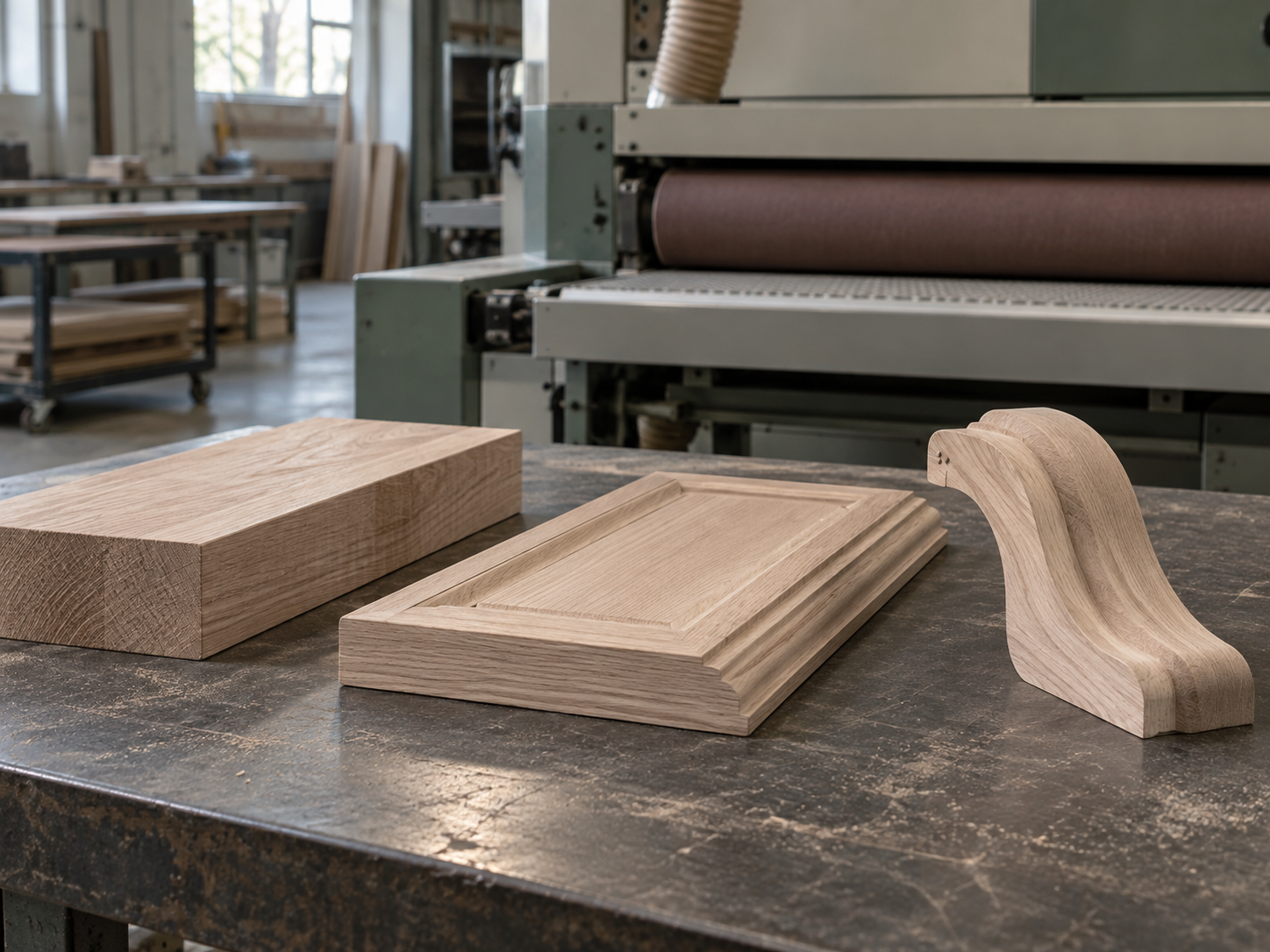
Solid-wood blanks, profiled cabinet-door edges, and carved or shaped components need contact that follows the geometry without losing detail. The sanding path also changes between raw wood and preparation for a coating stage.
The same workpiece-first approach carries across MASA’s broader wood sanding applications, including frames, mouldings, and bamboo components.
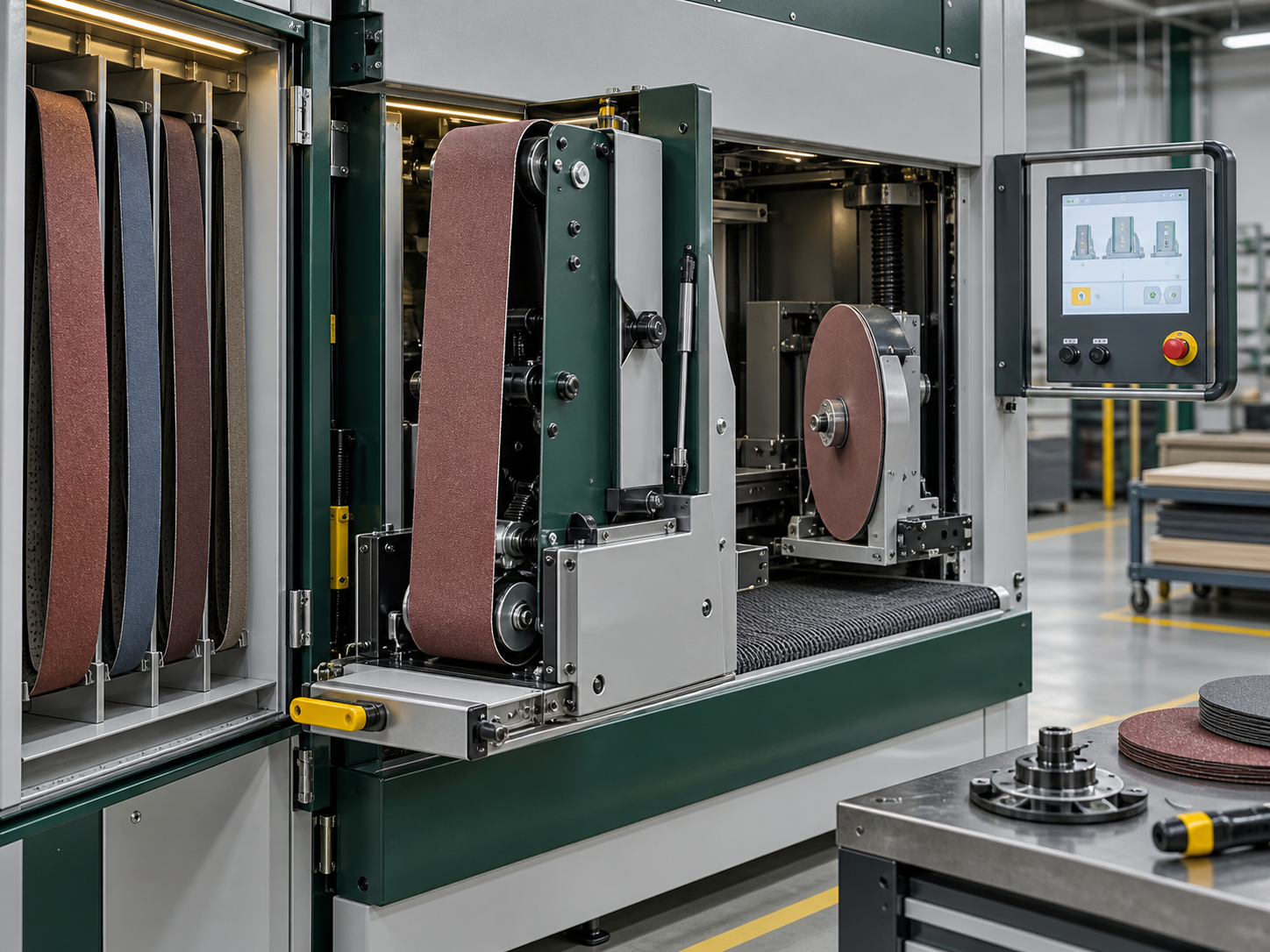
Iron and fire doors are the primary metal application, with aluminum door and window profiles, aluminum furniture frames, and stainless steel plates also within the confirmed scope. Typical goals include deburring, brushing, and preparation before painting.
Dedicated metal profile finishing setups extend this scope with prepared presets and material run-off testing.
On applicable machines, wood and metal parameters can be configured for selection through the HMI. Operators return to an agreed starting setup instead of rebuilding every setting.
Variable-frequency control provides the adjustment range needed to match feed and sanding action to different materials and finish goals.
Selected wide-profile configurations use pull-out sanding units for abrasive replacement. Where disc heads are included, quick-change interfaces can shorten access during setup changes.
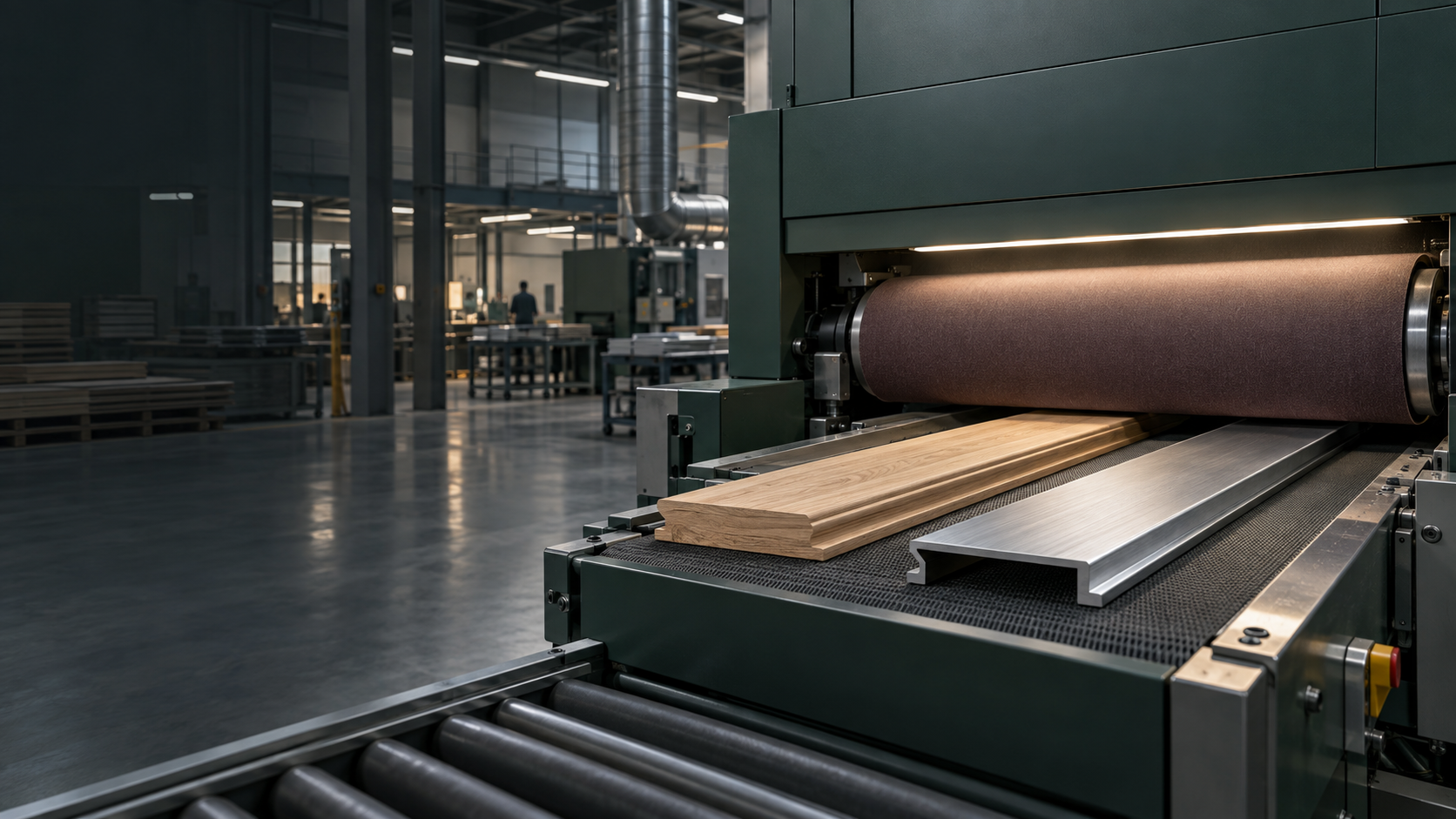
Select the configured material parameters on the HMI. On routine equipment, this preset switch typically takes about 5–10 minutes.
Install the grit and, where required, the applicable sanding head for the new material and finish target.
Run a sample and inspect the contacted surfaces before releasing the next batch.
Review the wood and metal workpiece ranges, surface geometry, process stage, finish target, output, and changeover frequency together.
Match the machine configuration, prepared presets, sanding heads, and abrasives to the combined scope.
Test both project materials on the configured equipment and check the relevant surfaces after sanding.
Confirm the agreed setup before shipment. Video inspection and on-site factory inspection are also supported.
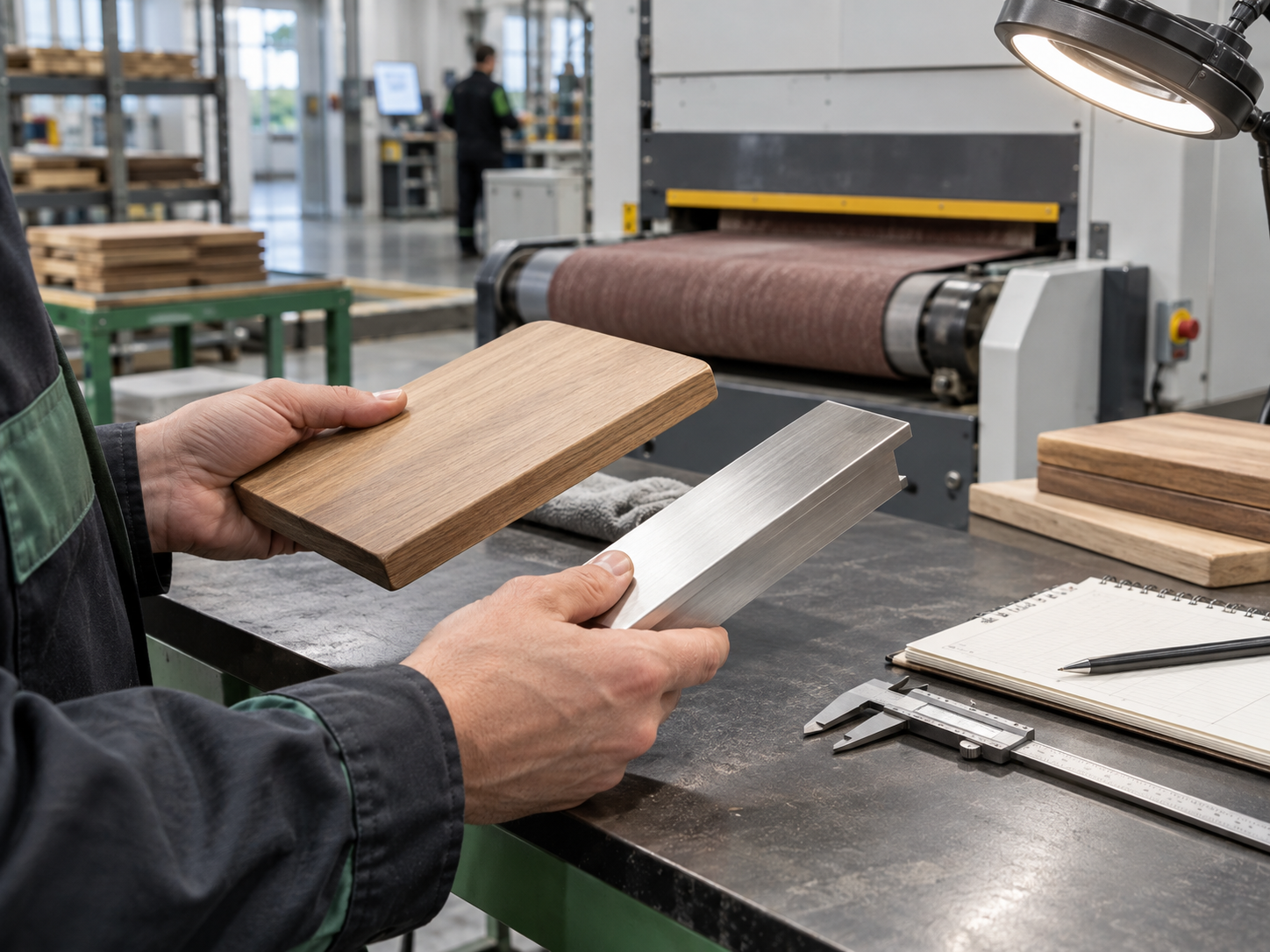
Describe both materials and workpieces, including dimensions, profiles, processing faces, current process, target finish, expected output, and changeover frequency.
Attach photos or drawings where available. Samples can be coordinated for the material run-off test after the application scope is reviewed.
Your inquiry is strictly confidential. A dedicated technical specialist will respond within 24 hours.