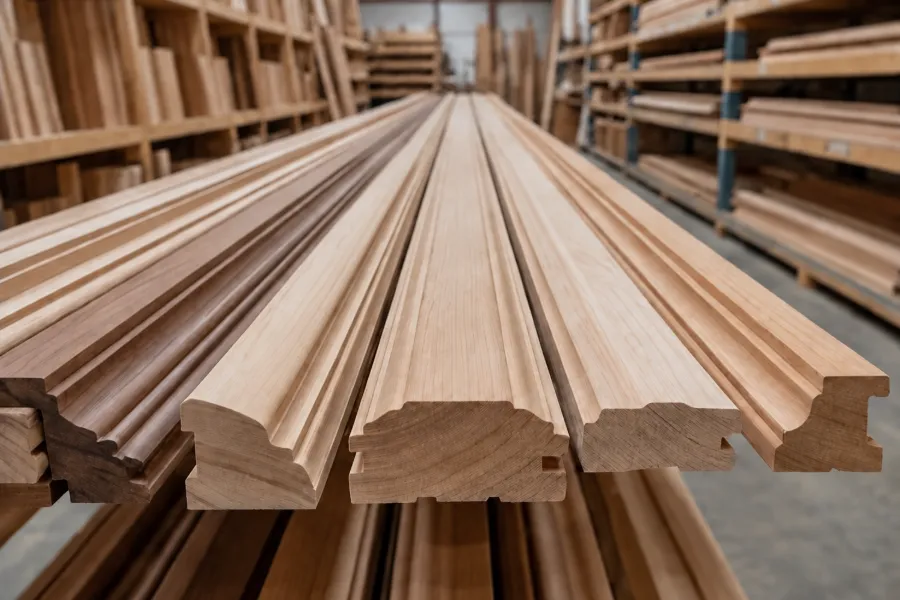
Long Mouldings and Linear Profiles
Long wood mouldings, trim, and linear profiles pass through several sanding stations on a continuous-feed path.
This route fits workpieces long enough to stay supported from infeed to outfeed.
Bring long mouldings, short components, profiled faces, and chamfered edges into a planned machine-sanding process.
MASA configures molding sanders for door and window profiles, furniture trim, skirting, and other linear wooden components.
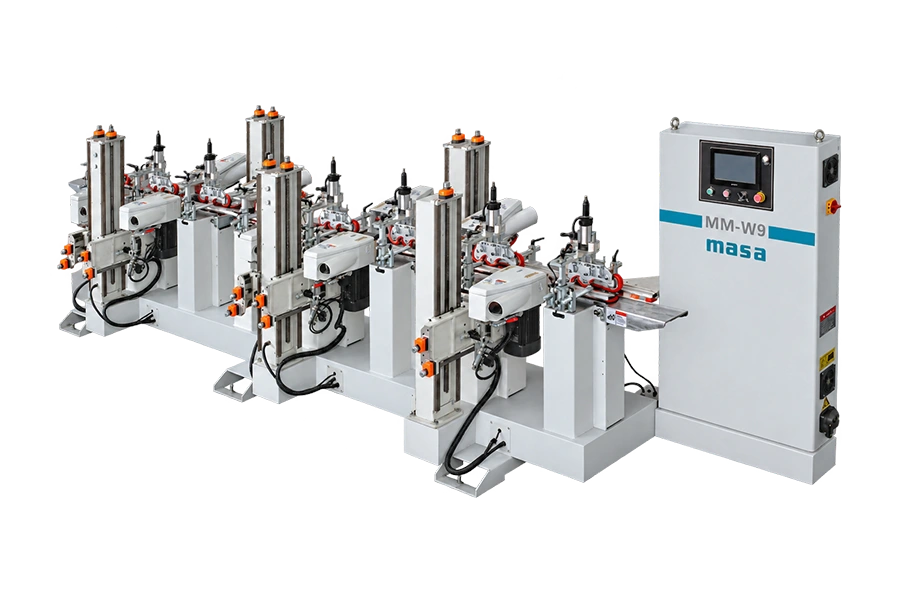
Long wood mouldings, trim, and linear profiles pass through several sanding stations on a continuous-feed path.
This route fits workpieces long enough to stay supported from infeed to outfeed.
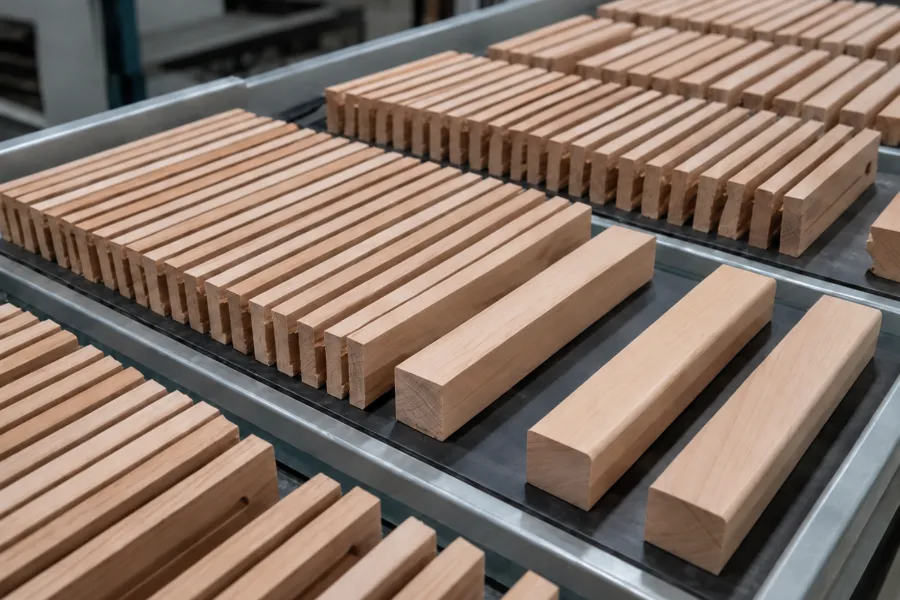
Short moulding and frame pieces need infeed and hold-down designed around their shorter length.
Short-piece molding sanders keep these compact parts aligned as they pass the sanding stations.
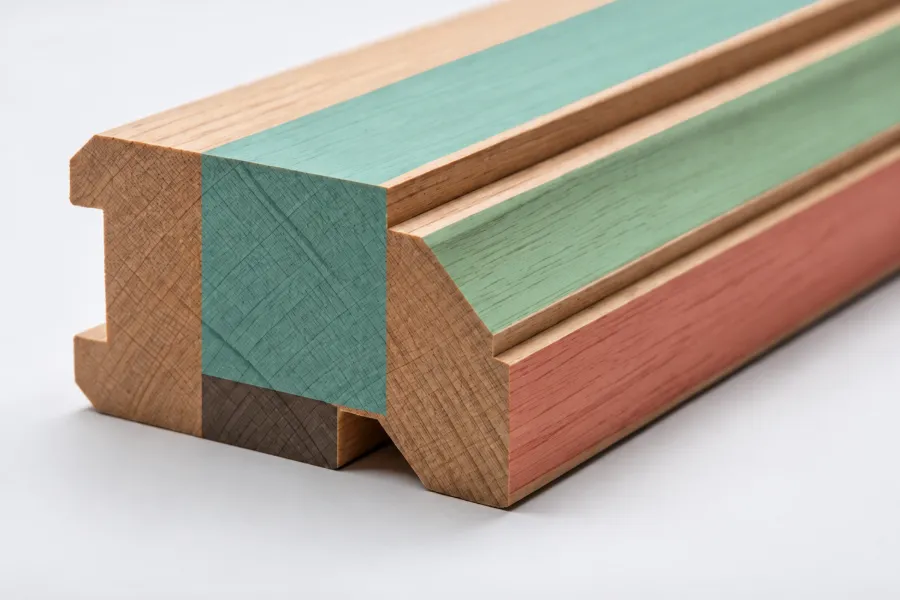
Chamfered and angled edges need a layout aimed at the bevel as well as the main faces.
This route is for linear parts that must leave with those angled edges sanded in the same pass.
CNC contour and straight-edge machines cover curved profiles, chamfers, milled edges, and linear sanding processes.
A linear profile sander for four-side sanding of shaped wood mouldings. Sanding frames are suitable for long straight...
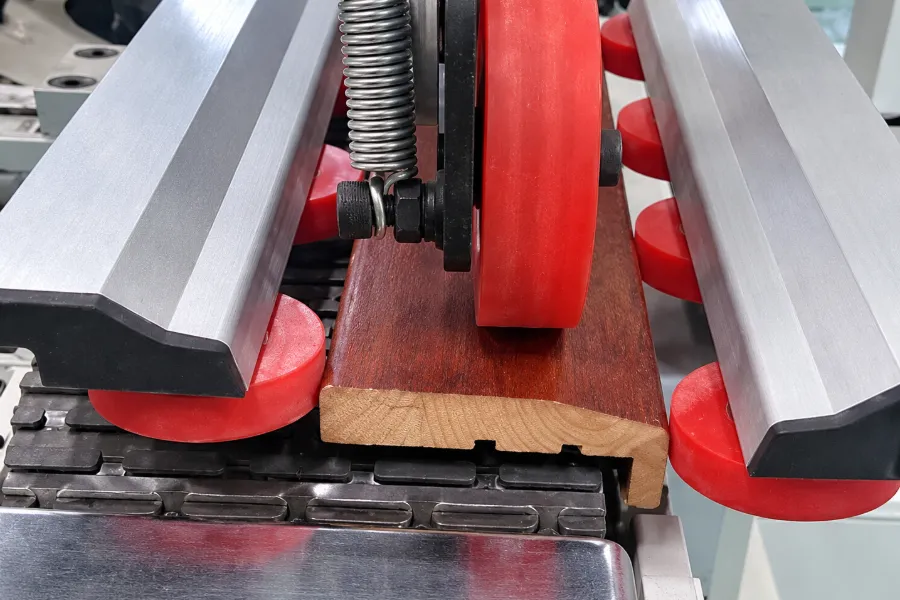
Sanding frames can be matched to the workpiece cross-section for close contact across shaped linear profiles.
This approach suits mouldings where the sanding unit needs to follow the profile closely and support surface flatness.
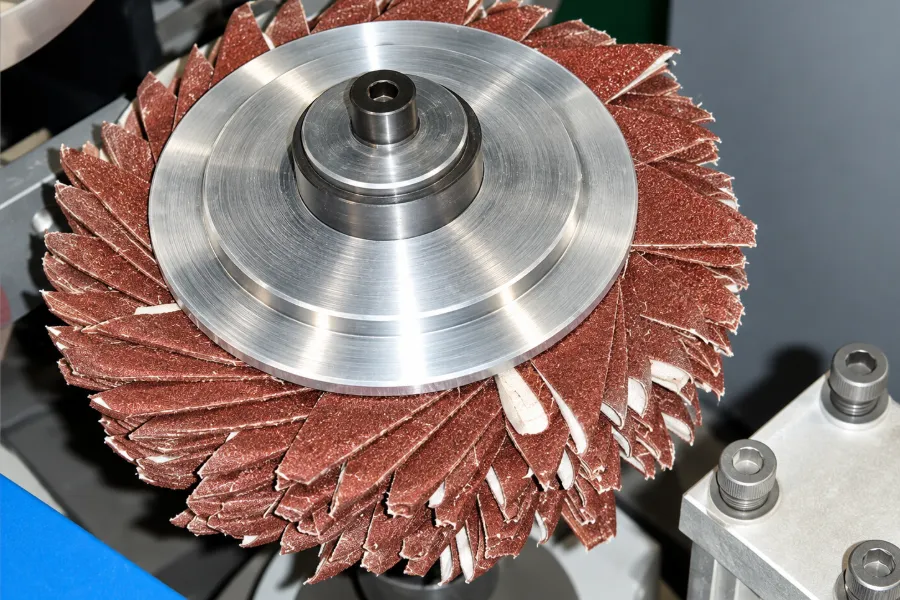
Sanding heads use a general-purpose structure with straightforward installation and removal.
They add flexibility when the workshop processes several moulding cross-sections or needs to adjust the sanding setup.
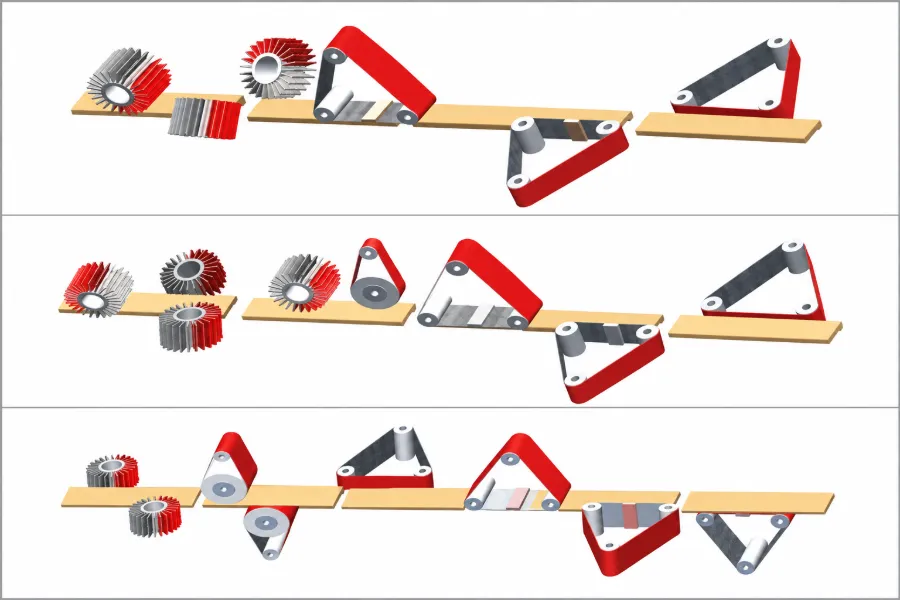
Feed speed and abrasive sequence can be adjusted to the material, profile, and coating condition.
Raw hardwood, UV full-sealed primer, and open-pore primer use different grit progressions from initial sanding to the final finish.
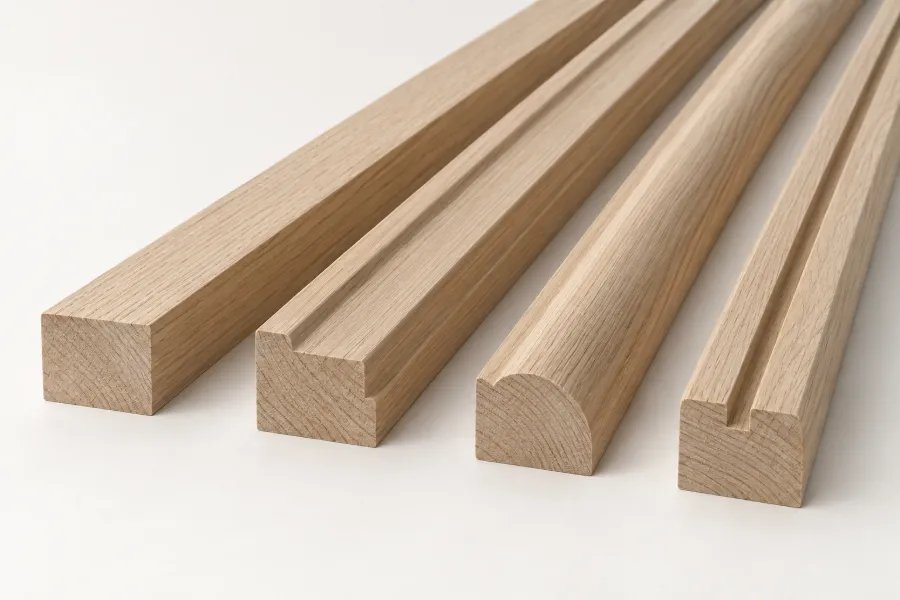
Door and window production uses long linear mouldings with different cross-sections and exposed faces. These details determine the feed route and how sanding frames or heads are arranged along the machine.
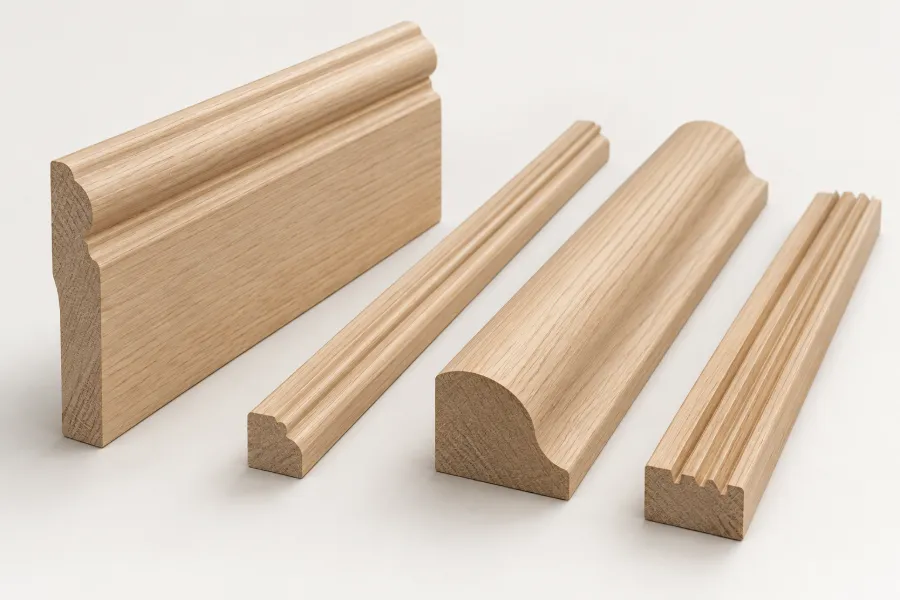
Furniture mouldings, skirting, and decorative trim often combine flat areas, curves, and narrow grooves. The sanding sequence follows the profile geometry, surface condition, and finish needed before coating or assembly.
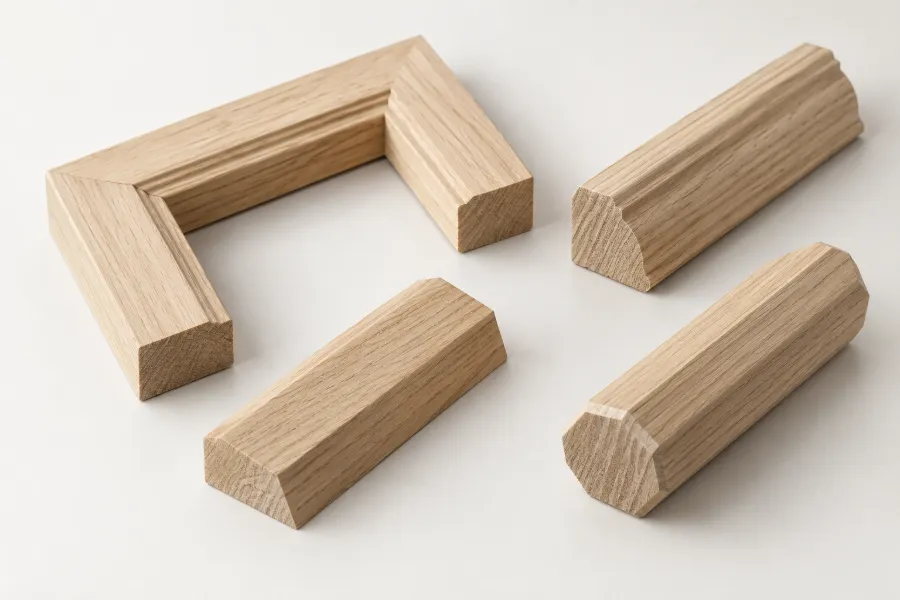
Short frame and trim parts need a feed route that keeps compact workpieces supported through the sanding area. Multi-side and chamfer configurations can prepare several faces and angled edges within the planned process.
Work with MASA for in-house manufacturing, custom sanding-line engineering, and long-term distributor support.
MASA operates a 3,000+ m² factory in Foshan. In-house machining and sheet-metal production keep frame and component manufacturing close to equipment assembly, supported by sanding-related patents.
Molding sanders can become part of a custom processing line with conveyors and related equipment. MASA supports capacity planning, equipment layout, module integration, installation guidance, and material run-off testing.
Regional distributors can discuss market coverage, product materials, installation and training support, remote technical assistance, and spare-parts supply through the MASA Partner Program.

It depends on the workpiece length and how it is supported during feeding.
Long mouldings and compact parts often need different feed routes, so MASA reviews the full size range before recommending a machine.
Yes. Four-side and chamfer configurations can address several faces and angled edges.
The sanding-unit layout follows the profile drawing, edge angles, and finish requirement.
Yes. MASA molding sanders can be configured for raw wood and different primer systems.
The abrasive sequence and feed setting are prepared around the material, coating condition, and removal target.
Send the profile drawing or clear photos, full size range, material, sanding sides, surface condition, finish target, and expected output.
A physical sample can also help define the sanding contact and machine arrangement.
Share the profile drawing, dimensions, material, sanding sides, surface condition, finish target, and expected output.
MASA uses this information to match the feed route, sanding frames or heads, abrasive sequence, chamfer requirements, and line arrangement.
Your inquiry is strictly confidential. A dedicated technical specialist will respond within 24 hours.


